
We have talked about the fact that systemic and subtle discrimination accumulates over time, so what is the antidote for that?
There are three areas you should prioritise as antidotes:
- centering the most marginalised,
- creating safe spaces, and
- providing opportunities
#1 – Centering the most marginalised
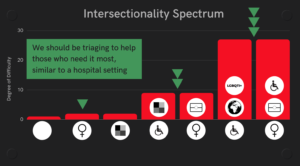
When we share power and create safe spaces, we must center the most marginalised people – as they aren’t usually even in the conversations that impact them.
We can advocate for the most marginalised people when they are not in the room, eg. suggesting a marginalised colleague or candidate for a job when they aren’t in the room when there is talk of a new job opportunity being planned (that they would be great for). We can do this in an opportunistic way.
If you are in-person at a hybrid conference, you could center the remote attendees when you are networking with others physically. This allows the remote attendees to get more opportunities to network through you.
One way to do this intentionally is to create your own Intersectionality Spectrum like the one below:
#2 – Creating Safe Spaces
It is difficult to change an entire organisation into one big safe space. This is because some organisations are large and creating safe spaces is a leadership skill that not everyone has or wants. This is why you should focus to create a safe space in your sphere of influence.
The best way to create safe spaces is to:
- avoid being judgemental – as co-workers will not feel safe in disclosing hidden marginalisations (eg. gender fluidity or hidden disability),
- be proactive in voicing your support for people who are more marginalised than yourself,
- be proactive in learning and sharing examples (such as through Not the Only One) to demonstrate that you understand the challenges and are not afraid to have tough conversations around it,
- understand triggers and how things can look like an overreaction when they are actually due to continued negative situations (see trigger image below),
- admit when you are wrong and when you don’t know the answer,
- hold people accountable if they are attacking someone unprofessionally,
- ask your team mates, co-workers etc what they need to feel safe and be productive on a regular basis,
- take that advice on board and try to act on it as best you can while giving them as much autonomy and support as reasonable, and
- based on the relative degree of difficulty that people from marginalised groups may face – focus on the people who need the most help.
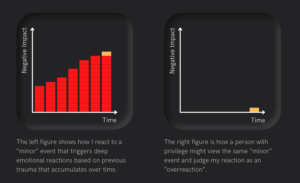
This is not straightforward, many people can be very cautious, and you are likely to make mistakes and feel uncomfortable early on. It is how you react to negative situations that many people from marginalised groups will use to decide if they are in a safe space.
#3 – Providing Opportunities
In the image below, Marilyn Monroe used her privilege (ie. sharing her power) to give Ella Fitzgerald an opportunity so she never had to play a small jazz club again. Ella didn’t need mentoring, nor did she need to improve her skillset, she simply needed an opportunity. This is why opportunity is the antidote to discrimination and the key is to give people from marginalised groups more opportunities to make up for the ones they have lost. This is how you share power.
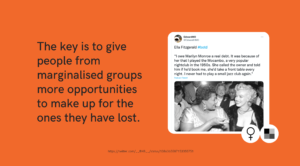
One of the ways you can do this is to take into account Achievement Relative to Opportunity, reduce the weighting of experience when hiring, and increase the weighting of Continuous Improvement Skills.
Dive Deeper
If you want to dive deeper – you can do a Discourse Analysis using the Resource: Discourse Analysis Framework to evaluate DEI resources, organisations and groups.
This gives you 12 areas to help you answer questions to clarify if your DEI is performative, incremental, or transformative.
More Information
For an example, have a look at the articles 18 ways you can help right now as an individual and Helping intersectionally marginalised people as an individual


